
Employees Need Evidence That Workplace Respect in Expected
October 26, 2026
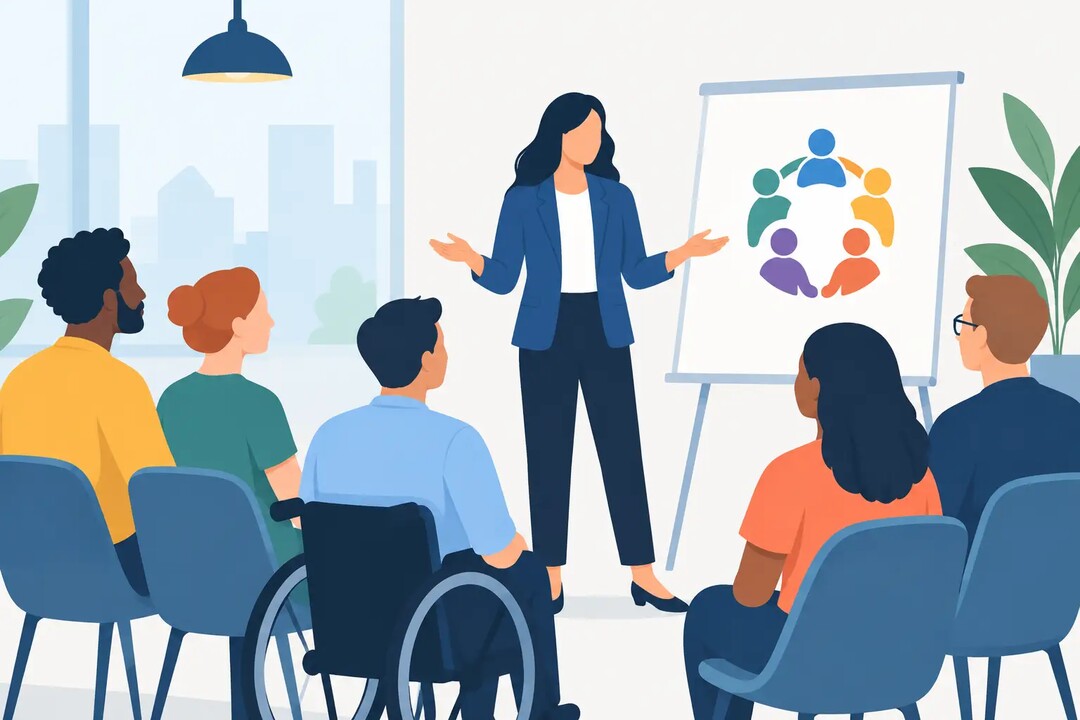
A policy may define discrimination. But it rarely tells an employee what to do when a colleague is consistently talked over in meetings, when a scheduling practice excludes a caregiver, or when a team joke crosses a line. Effective inclusion training for employees closes that gap by preparing people to recognize workplace moments, make respectful decisions, and take action before exclusion becomes conflict, turnover, or formal complaints.
For employers, the goal is not to ask people to memorize approved language or agree with a statement of values. The goal is to create consistent behaviors across shifts, locations, departments, and management levels. That requires practical learning design, credible scenarios, and managers who know how to reinforce expectations in daily work.
What inclusion training should accomplish
Inclusion training should help employees understand how everyday practices affect participation, access, respect, and opportunity. It should make clear that inclusion is not limited to intent. A process can create barriers even when no one intended harm, and a comment can undermine trust even when framed as humor.
A well-designed program gives employees a usable standard for action. They should leave able to notice exclusionary behavior, pause before making assumptions, communicate more respectfully, and raise concerns through appropriate channels. Managers need additional capability: responding without defensiveness, addressing patterns fairly, and adjusting team practices when a problem is identified.
This is also a business issue. Exclusion can weaken collaboration, increase avoidable employee relations risk, reduce retention, and prevent organizations from hearing information that matters. In safety-sensitive, customer-facing, healthcare-adjacent, government, industrial, and distributed workplaces, people must be able to speak up, ask questions, and contribute without being dismissed.
Start with the workplace moments employees recognize
Generic statements about belonging are easy to endorse and hard to apply. Training becomes useful when it is built around decisions employees actually make: who gets interrupted, who receives stretch assignments, whose schedule is treated as flexible, who is invited into informal conversations, and how concerns are handled when they are raised.
Use realistic scenarios that reflect the audience's work environment. A frontline crew may need to discuss shift handoffs, equipment assignments, language differences, and supervisor communication. A corporate team may need to address meeting dynamics, hybrid-work visibility, hiring decisions, and project ownership. The core principles can remain consistent, but examples should match the roles, power relationships, and operational pressures employees face.
Scenario-based video and case discussions work particularly well because they move the conversation from abstract agreement to behavioral judgment. Participants can examine what happened, identify the impact, consider options, and practice a better response without putting an individual employee on the spot.
Focus on behavior, not labels
Employees may arrive with different levels of familiarity, confidence, and concern about inclusion topics. Training should establish clear expectations without assuming every participant uses the same vocabulary. Plain language is usually stronger than jargon.
For example, instead of asking people to identify every possible bias category, show how assumptions can affect a decision: a supervisor assigns a client-facing opportunity based on who seems "like a fit," or a meeting leader repeatedly looks to the same people for input. Then ask what a fair, effective alternative looks like. This approach keeps the learning connected to performance, respect, and organizational standards.
Build inclusion training for employees around decisions
The strongest programs do more than raise awareness. They provide a decision path employees can use when a situation is unclear. A simple model might ask participants to notice the behavior, consider its impact, respond respectfully, and seek support when the issue cannot be resolved directly.
That doesn't mean every situation should be handled through peer-to-peer conversation. The appropriate response depends on the severity of the conduct, power dynamics, safety concerns, and company reporting procedures. Employees should know when a respectful question or interruption is appropriate, when a manager needs to step in, and when to use established reporting channels.
Training should also distinguish between a one-time misstep and a repeated pattern. A person may need feedback after an unintentional comment. Repeated exclusion, retaliation, harassment, or conduct that violates policy requires a more formal response. Clear boundaries protect employees and prevent managers from treating serious concerns as mere communication problems.
Give managers a separate learning path
Managers set the conditions employees experience every day. If they reward only the loudest voices, dismiss feedback, distribute opportunities informally, or fail to address disrespect, an employee course alone will not change the team environment.
Manager training should prepare leaders to facilitate inclusive meetings, assign work transparently, give equitable access to development, and respond effectively when someone says they have been excluded. Leaders should practice language such as: “Thank you for raising this. I want to understand what happened,” rather than immediately debating intent or asking the employee to prove their experience.
They also need to know the limits of their role. Managers should not investigate serious complaints independently or promise confidentiality they cannot maintain. Training must connect leadership behaviors to the organization’s reporting, documentation, and escalation processes.
Use formats that fit the workforce
A single annual course may satisfy a scheduling requirement, but it rarely creates lasting behavior change on its own. A more effective approach combines a foundational experience with shorter reinforcement at the points where decisions occur.
For a distributed workforce, an interactive eLearning course can establish a consistent baseline and capture completion data. Short video-based micro-learning can reinforce one behavior at a time, such as interrupting interruptions or challenging assumptions in assignments. Facilitator-led sessions create space for teams to discuss realistic cases, practice responses, and connect expectations to local procedures.
The right mix depends on workforce access and risk. Deskless employees may need brief, supervisor-led sessions that can be delivered during shift meetings. Leaders may benefit from a longer workshop with case studies and coaching practice. Organizations with multilingual teams should consider whether translated materials, captions, and culturally clear examples are needed for equal access to the learning experience.
Complete, implementation-ready materials reduce the burden on internal teams. A training package that includes scenario-based video, discussion questions, facilitator guidance, participant activities, assessments, and digital delivery options makes it easier to maintain consistency while adapting the session to local needs. The Sollah Library supports this approach by providing learning assets that can be used in instructor-led, digital, or blended programs.
Make discussion safe enough for learning, structured enough for action
Training sessions can lose value when discussion becomes either silent or overly personal. Set expectations at the start: focus on workplace behavior, speak from experience without naming private details, listen without interrupting, and challenge ideas without attacking people.
Facilitators should not pressure participants to disclose personal experiences. Instead, use a scenario and ask what each person in the situation could do differently. This protects privacy while keeping the conversation honest. It also helps employees build skills for intervening as colleagues, not only reacting after they have been personally affected.
When challenging comments arise, facilitators should address them directly and calmly. Avoid public shaming, but do not allow harmful assumptions to stand unexamined. Reconnect the discussion to the organization’s expectations, the likely impact on coworkers, and the practical behavior required going forward.
Measure whether behavior is moving
Completion rates matter, especially where training supports compliance obligations, but they are only the starting point. Measure whether participants can apply the learning through knowledge checks, scenario-based assessments, and manager observation.
Look for operational indicators as well. Depending on the organization, these may include employee survey items about voice and respect, retention trends, participation in development opportunities, promotion patterns, complaint themes, absenteeism, or team-level turnover. No single measure proves that training caused a change. Patterns over time, combined with qualitative feedback, provide a more credible picture.
Review the program after rollout. If employees understand the concepts but managers still struggle to respond to concerns, add leadership practice. If participation is low in a remote or shift-based group, adjust the delivery method. If the same issue keeps appearing in case discussions, examine the process behind it rather than asking employees to compensate for a flawed system.
Keep the work visible after the session
Training has the most value when it becomes part of how the organization runs meetings, assigns work, hires, coaches, and addresses conflict. Give teams a small number of observable commitments they can use immediately, then revisit them in manager check-ins and team conversations.
Employees do not need perfection from their organization. They need evidence that respectful participation is expected, concerns will be handled seriously, and leaders will act when practices exclude people. Build training around those moments, reinforce it where work happens, and give people a clear next step when they see something that needs to change.