
Safety Training Must Always Be More Than a Compliance Requirement
November 21, 2026
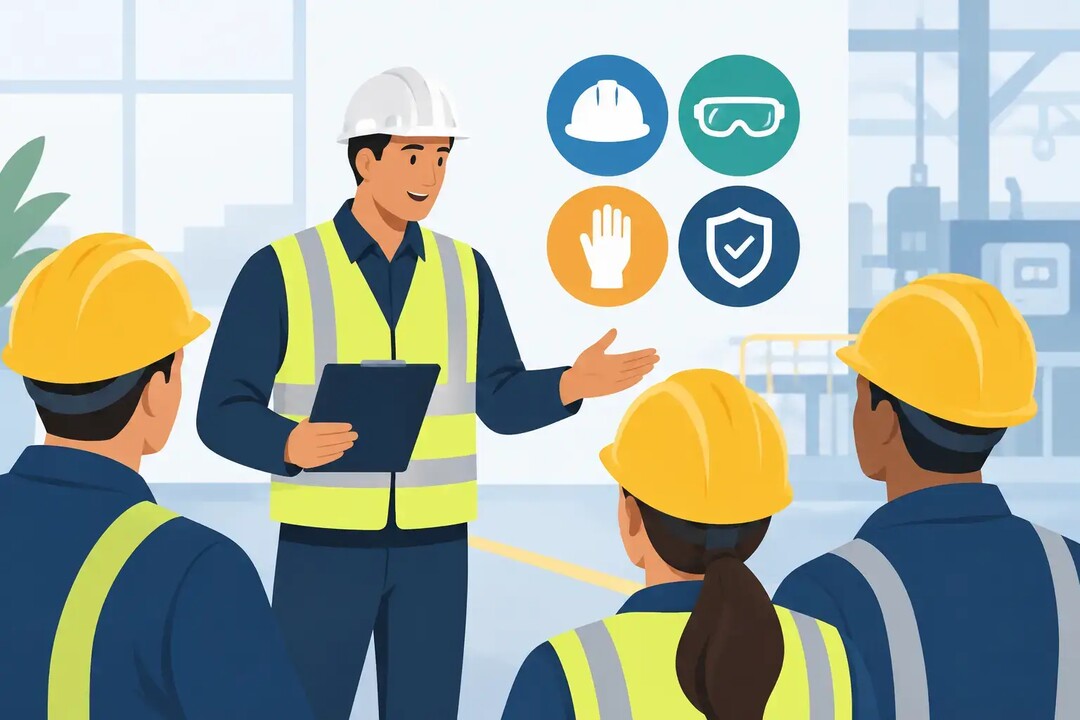
A missed pre-shift check, an employee who hesitates to report a near miss, or a rushed workaround can become the moment an ordinary workday turns into an incident. The most effective safety topics for supervisors prepare frontline leaders to recognize those moments early, respond with confidence, and make safe work the normal way work gets done.
Supervisors translate organizational policy into daily behavior. They assign work, manage competing priorities, observe performance, and set the tone employees follow when conditions change. That makes supervisor safety training more than a compliance requirement. It's a practical investment in fewer injuries, stronger reporting, more consistent operations, and greater trust across the workforce.
Why Safety Topics for Supervisors Need a Different Approach
Employees need role-specific instruction on hazards, procedures, and protective equipment. Supervisors need that foundation too, but their responsibilities are broader. They must decide whether work can continue, coach employees through unsafe behavior, investigate concerns fairly, and escalate risks before someone gets hurt.
A policy-only session rarely builds those skills. Supervisors need realistic scenarios that reflect the pressure of production deadlines, staffing gaps, customer demands, equipment problems, and experienced employees who may resist correction. Training should give them a repeatable response:
- pause the work
- assess the hazard
- involve the right people
- control the risk, and
- document or report what happened
The right priorities depend on the work environment. A manufacturing supervisor may need deeper practice in machine guarding and lockout/tagout oversight. A healthcare-adjacent leader may focus on workplace violence, ergonomics, and exposure controls. A supervisor in office, retail, or public-facing settings may spend more time on emergency response, slips and falls, and psychological safety. The core leadership skills remain consistent, but the examples must fit the job.
The Safety Topics Every Supervisor Should Be Ready to Lead
Hazard recognition and job safety conversations
Supervisors should know how to identify hazards before assigning or beginning work. This includes obvious physical risks such as blocked exits, damaged tools, poor housekeeping, and missing guards, as well as changing conditions such as fatigue, weather, new employees, altered workflows, and contractor activity.
Training should move beyond asking supervisors to simply look for hazards. Teach them to lead a short pre-task conversation:
- What could go wrong?
- What has changed since the last time we did this work?
- What controls are in place? Who has the authority to stop the job?
These questions create a practical pause without turning every shift briefing into a lengthy meeting.
Reporting hazards, near misses, and concerns
A near miss is valuable information, not a failed injury report. Yet employees may stay quiet if they expect blame, believe nothing will change, or assume an issue is too minor to matter. Supervisors strongly influence whether reporting becomes routine or disappears underground.
Train supervisors to thank employees for speaking up, gather the basic facts without jumping to conclusions, and close the loop on what happens next. If a concern cannot be fixed immediately, the supervisor should explain the interim control, who owns the follow-up, and when employees can expect an update. Silence after a report teaches people that reporting is pointless.
Stop-work authority and escalation
Employees must understand that they can stop work when conditions are unsafe. Supervisors must be equally clear about what to do when that happens. Their first response should protect people and stabilize the situation, not challenge the employee for interrupting production.
Scenario-based practice is especially useful here. A supervisor may face a delivery deadline, a frustrated customer, or a senior employee who insists that the task is safe because it has been done that way for years. Discussing how to pause, verify the risk, contact the appropriate safety or operations leader, and restart only when controls are in place prepares leaders for the real pressure behind the decision.
Incident response and investigation basics
When an injury, property-damage event, or near miss occurs, supervisors need a calm, structured response. Immediate care and emergency procedures come first. Once people are safe, the supervisor must preserve relevant information, notify the appropriate contacts, document facts accurately, and avoid assigning blame before the review is complete.
Effective incident investigation looks at conditions, systems, communication, equipment, training, and supervision - not just the final action a person took. This does not eliminate individual accountability. It does help organizations find the conditions that made an error more likely and prevent recurrence. Supervisors should learn how to ask open questions, distinguish facts from assumptions, and avoid language that discourages future reporting.
Safe coaching and accountability
Correcting unsafe behavior is one of the most visible safety responsibilities a supervisor holds. Delaying the conversation can signal approval. Overreacting can create defensiveness and reduce trust. The goal is direct, respectful coaching that addresses the risk and makes the expected behavior clear.
A useful coaching structure is simple: describe what was observed, explain the hazard or required procedure, ask what made the safe step difficult, and agree on the immediate correction. If repeated behavior requires formal accountability, supervisors should follow established policy consistently. Training should prepare them for both conversations, because supportive coaching and accountability are not opposites. They work together when expectations are clear.
Fatigue, impairment, and fitness for duty
Fatigue can affect judgment, reaction time, attention, and communication. Supervisors may also encounter possible impairment, medication concerns, heat stress, or employees who are physically unable to perform a task safely. These situations require discretion, consistency, and a clear understanding of organizational procedures.
Supervisors should not be expected to diagnose an employee. They should know how to recognize observable signs, remove the person from immediate risk when necessary, protect confidentiality, document objective facts, and engage HR, safety, or other designated leaders. Role-play can help supervisors practice language that is respectful and firm rather than accusatory.
Emergency readiness and communication
Emergency plans only work when people understand their role before an emergency begins. Supervisors should be able to direct evacuations, account for team members, communicate with emergency personnel, and manage the return to work according to site procedures.
This topic should include more than a review of posted maps. Use short exercises that ask leaders to respond to a blocked exit, a missing employee at an assembly point, a severe-weather alert, or conflicting instructions. For dispersed teams, cover how leaders communicate during remote-work emergencies, travel incidents, or facility closures.
Turn Topics Into Consistent Supervisor Practice
A broad safety curriculum can overwhelm busy supervisors if every subject is delivered as a long annual presentation. Build a learning plan around the decisions leaders make most often, then reinforce those decisions over time. Short training segments, shift huddles, case studies, and facilitated discussions can keep safety visible without taking supervisors away from operations for extended periods.
For a practical rollout, prioritize these five actions:
- Identify the hazards, incident patterns, and reporting gaps most relevant to each work group.
- Pair core safety expectations with scenarios supervisors are likely to face on their shifts.
- Give leaders conversation guides, escalation paths, and documentation tools they can use immediately.
- Create time for peer discussion so supervisors can compare decisions and learn from recurring challenges.
- Measure more than completion rates by tracking near-miss reporting, corrective-action follow-through, observations, and incident trends.
Training assets should also match the delivery environment. A new supervisor may benefit from a complete facilitated program with video scenarios, discussion prompts, and assessments. An experienced leader may need a focused micro-learning module before a seasonal hazard or process change. Organizations with distributed teams need materials that work in person, virtually, and through learning systems that can track completion and comprehension.
Sollah Library's ready-to-use video, eLearning, discussion, and facilitation resources can help organizations deliver that consistency without asking internal teams to build every lesson from scratch. The strongest programs still make room for local examples, site procedures, and leadership expectations, because generic training cannot replace an informed conversation about the work employees are doing.
Make Safety a Leadership Behavior
Safety culture is often described as a shared responsibility. That is true, but supervisors carry a distinct responsibility: they make the organization’s priorities visible in daily decisions. Employees notice whether a supervisor investigates a concern, responds constructively to a near miss, and stops a task when conditions are not right.
Give supervisors the knowledge, language, and practice to handle those moments well. When they can lead safety conversations with clarity and follow through on what employees raise, safety becomes less about memorizing rules and more about protecting people while keeping work reliable.