
For Effective Prevention Training... Cadence Is Everything
November 27, 2026
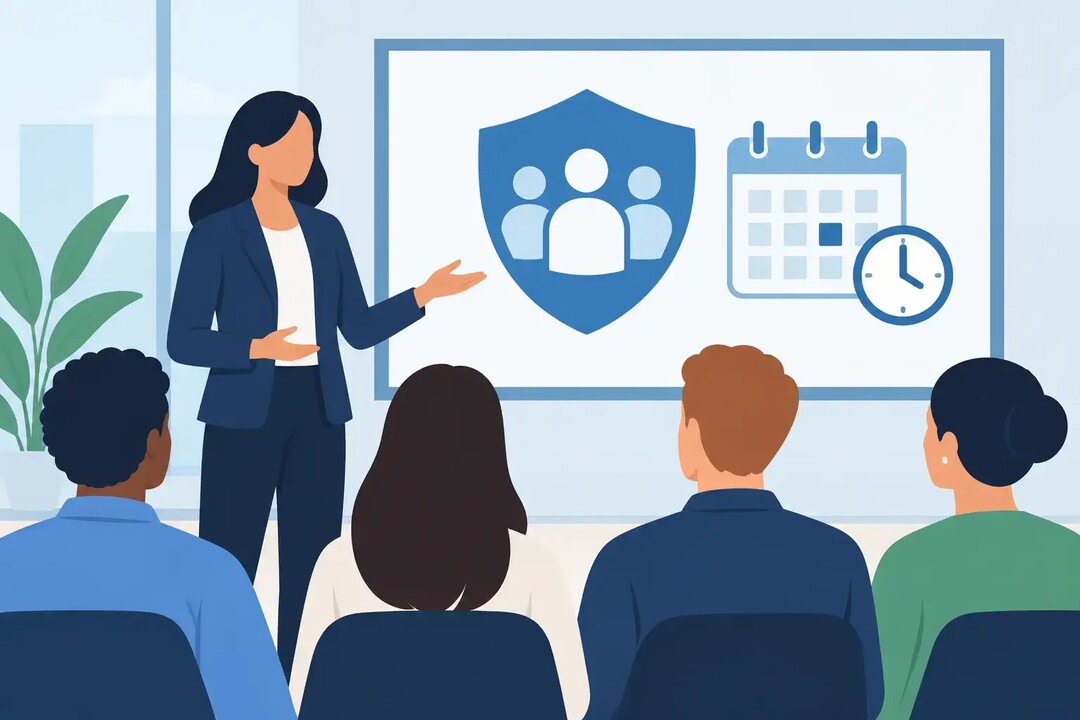
A harassment complaint rarely begins with a single dramatic event. More often, it follows smaller moments that went unchallenged: an offhand joke, a repeated comment, a supervisor who did not know how to respond, or a team that assumed someone else would address it. That is why the question, when should harassment training occur, cannot be answered with “once a year.” Effective prevention depends on training at the moments when employees and leaders are most likely to need it.
For HR, L&D, and compliance teams, the goal is not simply to document course completion. It's to give people clear behavioral expectations, realistic response skills, and confidence in reporting channels before a concern becomes a workplace crisis. A well-timed training plan also helps organizations demonstrate that they took reasonable, consistent steps to prevent and address harassment.
When Should Harassment Training Occur?
Harassment prevention training should occur:
- at onboarding
- on a recurring schedule
- when leaders take on supervisory responsibility, and
- after meaningful workplace changes or risk events.
The right cadence depends on applicable federal, state, and local requirements, workforce size, industry risk, and the organization’s culture.
Some states and local jurisdictions prescribe who must be trained, how often, how long training must last, and which topics it must cover. California, Washington, Delaware, Connecticut, Illinois, New York, and several cities have specific requirements, for example. Those rules can change, so legal counsel or a qualified compliance resource should confirm the obligations that apply to each employee population.
Legal minimums are a floor, not a complete prevention strategy. An employer can meet a required training interval and still leave new hires, frontline supervisors, or dispersed teams without the guidance they need at the moment it matters.
Start Before Day One and Reinforce at On-boarding
The first message employees receive about respectful conduct should not wait until an annual compliance course appears in their inbox. Include harassment prevention expectations in pre-boarding or orientation materials, then provide meaningful training as close to the employee’s start date as practical.
New employees need more than a policy acknowledgment. They should understand what harassment can look like in person, online, during travel, at customer sites, in team chats, and at work-sponsored social events. They also need to know how to raise concerns, who can receive a report, what confidentiality can and cannot mean, and how the organization prohibits retaliation.
A short on-boarding module can establish core expectations, but it should be followed by a fuller learning experience when schedules allow. For organizations with shift workers, field employees, or high-volume hiring, this may mean offering a concise digital course immediately and a facilitated session within the first 30 to 60 days. The point is to make prevention part of how people enter the culture, not an administrative task postponed indefinitely.
Train All Employees on a Recurring Cadence
Annual harassment training is a practical standard for many employers because it keeps expectations visible and creates a repeatable compliance process. But repeating the same policy slides every year can produce completion without learning. Employees remember scenarios, decisions, and discussion far more than dense legal definitions.
Use the recurring session to revisit essential expectations and explore situations that reflect the workforce’s real environment.
- A manufacturing team may need examples involving shift handoffs, locker rooms, production floors, and contractor interactions.
- A hybrid office workforce may need to address messaging apps, video meetings, virtual backgrounds, and behavior outside standard work hours.
Consider a layered model: a more comprehensive annual course supported by short reinforcement activities during the year. Brief video scenarios, manager-led discussions, case studies, or digital knowledge checks can keep reporting options and bystander actions top of mind. This approach is especially useful when employees are spread across locations or cannot be pulled from operations for lengthy sessions.
Provide Additional Training When Someone Becomes a Supervisor
Supervisors require separate, deeper training before or immediately after they begin managing others. They carry responsibilities employees do not: recognizing potential issues, responding appropriately to disclosures, escalating concerns promptly, avoiding retaliation, and maintaining professional boundaries.
A manager who says, “I’ll keep this between us,” may be trying to reassure an employee while unintentionally mishandling a report. A manager who waits for a written complaint may delay an investigation. Training should prepare leaders for these moments with clear response language and escalation steps.
Do not assume leadership experience elsewhere is enough. Internal reporting channels, investigation protocols, documentation expectations, and organizational culture vary. Include harassment prevention in new-manager programs, supervisory promotions, and leadership development curricula rather than treating it as a separate compliance obligation.
Trigger Training After Changes That Create New Risk
A fixed calendar cannot anticipate every workplace change. Additional training or targeted reinforcement may be warranted when new risks emerge, including:
- A merger, acquisition, restructuring, or rapid growth brings together teams with different norms and policies.
- The organization introduces remote work, new communication platforms, or significant changes to scheduling and work locations.
- Employees begin working more closely with customers, vendors, contractors, or temporary staff.
- A pattern of concerns, climate survey findings, exit interview themes, or investigation data suggests confusion or harmful behavior.
- Laws, internal policies, reporting channels, or investigation procedures change.
Targeted training should address the identified issue without revealing private details or turning one person’s complaint into a public lesson. If concerns involve inappropriate team-chat behavior, for example, deliver a focused session on digital conduct, reporting, and bystander intervention for the relevant population. Keep the message broad enough to protect privacy and specific enough to change behavior.
Respond Carefully After a Complaint or Investigation
A complaint may reveal a wider need for training, but training is not a substitute for a prompt, impartial investigation or appropriate corrective action. It should never be used to signal that the reporting employee caused the problem or that a group session has “resolved” the concern.
- After an investigation, assess whether findings point to a gap in knowledge, leadership practice, policy clarity, or team norms.
- Refresher training may be appropriate for the involved work group, a department, or the full organization.
- In some cases, individualized coaching or corrective action for leaders will be more effective than another all-staff course.
Timing matters. Deliver training after immediate safety, reporting, and investigative needs are addressed, and coordinate the response with HR, legal, employee relations, and operational leaders. Employees should see that the organization responds to concerns with both accountability and practical prevention measures.
Build a Schedule That Works in Real Operations
The strongest harassment training calendar is planned, owned, and easy to administer.
- Start by mapping legal requirements by employee location and role.
- Then build a baseline schedule for on-boarding, annual refreshers, supervisor training, and trigger-based interventions.
Training teams should also decide how learning will be delivered. Self-paced eLearning supports large, distributed workforces and makes completion tracking easier. Instructor-led workshops create room for discussion, practice, and questions. A blended approach often works best: employees complete foundational digital learning, then managers facilitate short conversations using realistic scenarios and clear decision points.
Keep records that show who completed training, when they completed it, which version they received, and whether the program met jurisdiction-specific requirements. Completion data matters, but it should not be the only measure. Review reporting trends, survey results, manager confidence, employee understanding of reporting options, and recurring investigation themes to see whether training is influencing workplace behavior.
Make the Content Worth Employees’ Attention
Employees can tell when training is built only to check a compliance box. Policy-heavy presentations may explain rules, but they rarely prepare people to respond when a colleague makes a biased remark, a client crosses a line, or a manager receives a concern.
Use scenario-based learning that shows the gray areas employees actually encounter. Include the perspective of the person experiencing harm, the observer, the manager, and the organization receiving the report. Give learners a chance to identify what went wrong, choose an appropriate response, and understand why retaliation prevention matters after a concern is raised.
Facilitators need support, too. Provide discussion prompts, response guidance, participant activities, and escalation information so a manager or internal trainer is not left improvising on a sensitive topic. Ready-to-use video, eLearning, and facilitation materials can help organizations deliver consistent training across locations while leaving room to tailor examples to their workforce.
The best time to train is before employees need to rely on the lesson. Make harassment prevention a recurring workplace practice - visible at on-boarding, reinforced throughout the year, and strengthened whenever your people, risks, or responsibilities change.