
Turn Skills-Based Hiring into a Repeatable Workplace Practice
November 07, 2026
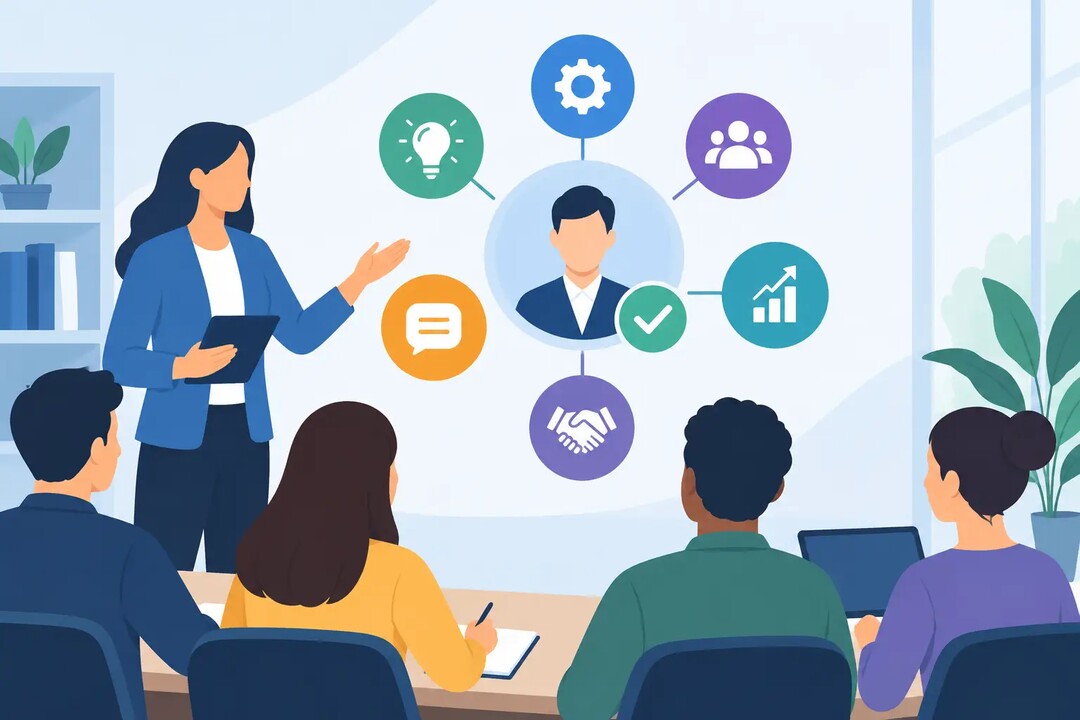
A skills based hiring training course gives hiring managers a practical way to evaluate what candidates can do, not simply where they have worked, which schools they attended, or how confidently they interview. For employers managing hard-to-fill roles, high turnover, or inconsistent interviewing practices, that shift can improve job fit while reducing avoidable bias and hiring risk.
The challenge is not deciding that skills matter. Most organizations already agree with that principle. The challenge is helping managers translate a job’s real requirements into fair, consistent assessments that hold up across locations, departments, and candidate pools. Effective training turns skills-based hiring from a promising policy statement into a repeatable workplace practice.
What a Skills Based Hiring Training Should Change
A course should not merely explain the definition of skills-based hiring. It should prepare people to make better decisions at the moments that matter:
- defining the role
- reviewing applicants
- asking interview questions
- assessing work samples
- documenting the final decision
That means training needs to address both capability and behavior. Hiring teams need to recognize the difference between a credential and a demonstrated skill. They also need to understand how familiar signals - a well-known employer, a polished resume, a shared background, or an impressive communication style - can influence judgment even when they do not predict performance in the role.
For example, a customer service supervisor may not need a particular degree or a specific number of years in one industry. The role may instead require de-escalation, schedule planning, coaching, accurate documentation, and sound judgment under pressure. A skills-based process identifies those requirements, then gives candidates an equitable opportunity to demonstrate them.
The result isn't a hiring process with fewer standards. It's a process with clearer, more job-relevant standards.
Start With the Work, Not the Resume
The strongest skills-based hiring programs begin with job analysis. Before managers can assess candidates fairly, they must agree on what successful performance actually looks like.
Training should teach participants to separate essential skills from preferences. Essential skills are capabilities a person must bring to perform safely, effectively, or compliantly from the start, or learn quickly with reasonable support. Preferences are often inherited from past job postings and may unintentionally narrow the applicant pool without improving hiring outcomes.
A practical job analysis asks managers to identify the tasks, decisions, tools, interactions, and conditions that define the role. For a manufacturing lead, that may include interpreting production data, reinforcing safety procedures, prioritizing competing work, and coaching employees through quality issues. For an administrative coordinator, it may involve managing sensitive information, organizing workflows, communicating with multiple stakeholders, and resolving scheduling conflicts.
Define observable evidence
Vague requirements produce vague interviews. Terms such as “leadership,” “initiative,” “culture fit,” and “strong communicator” can mean different things to different interviewers. Training should show managers how to convert broad qualities into observable evidence.
Instead of asking whether a candidate has “leadership presence,” a hiring team might assess whether the candidate can set expectations, give clear feedback, address a performance concern, and explain how they would build accountability. Instead of looking for someone who is “detail-oriented,” assess whether they can identify errors in a realistic document, follow a defined process, or prioritize accuracy when time is limited.
This level of specificity improves fairness and makes post-hire performance easier to evaluate against the original selection criteria.
Train Interviewers to Use Structured, Job-Relevant Methods
Unstructured interviews often reward rapport, confidence, and similarity. They can also create uneven experiences, with one candidate asked technical questions and another asked mostly conversational questions. A skills-based hiring training course should give interviewers a disciplined alternative.
Structured interviews use the same core questions, the same scoring criteria, and the same definition of successful responses for every candidate considered for the same role. Interviewers can still ask appropriate follow-up questions, but the assessment remains anchored to the job.
- Behavioral questions are useful when a candidate has had a comparable opportunity to demonstrate the skill. Questions such as “Tell me about a time you had to resolve a conflict between team members” can reveal how someone approached a real workplace challenge.
- Situational questions are useful when candidates may have gained relevant skills in different settings. For example: “A customer is upset because a promised delivery has been delayed. What would you do first, and why?”
Work samples, simulations, and role plays can add valuable evidence. They should be proportionate to the job, accessible to candidates, and evaluated with a clear rubric. Asking a candidate for a short written response, a prioritization exercise, or a customer conversation role play may reveal more about job readiness than another round of general interview questions.
Build Scoring Discipline Before the Interview Begins
Consistent assessment depends on more than good questions. Hiring teams need a shared scoring process before candidates arrive.
A rating scale should describe what different levels of evidence look like. For a conflict-resolution skill, a low score might reflect avoidance, blame, or an inability to identify next steps. A strong score might reflect active listening, fact-finding, respectful communication, and a practical resolution that considers policy and relationships.
Training should also address common rating errors. Interviewers may anchor on their first impression, give higher scores to candidates who resemble successful employees from the past, or allow one strong answer to influence every category. These are human tendencies, not evidence of bad intent. Clear rubrics, independent scoring, and a structured debrief reduce their impact.
During the debrief, managers should compare evidence rather than argue from instinct. “I liked them” is not a defensible hiring rationale. “They provided a clear example of coaching an underperforming employee, identified the root cause, set measurable expectations, and followed up on progress” is evidence tied to the role.
Address Bias Without Treating Training as a One-Time Fix
Skills-based hiring can reduce bias, but it does not remove bias automatically. A job posting may still include unnecessary credential requirements. An interviewer may still assume a career gap signals low commitment. A work sample may unintentionally favor candidates who have had access to certain tools or industry language.
Training should help hiring teams recognize where subjective judgment enters the process and what to do instead. That includes using inclusive job language, assessing transferable skills, offering clear instructions, providing reasonable accommodations, and documenting decisions against established criteria.
It also requires a realistic message: fair hiring is an operational practice, not a single workshop outcome. Managers need refresher learning, examples tailored to their roles, and tools they can use when a requisition opens. Short scenario-based modules can reinforce concepts between hiring cycles, while facilitated discussions can help leaders examine difficult decisions and align on standards.
Design Training for the People Who Actually Hire
A useful program recognizes that recruiters, hiring managers, interview panelists, and senior leaders have different responsibilities. Recruiters may need support translating business needs into inclusive job postings and screening criteria. Managers need practice defining skills, asking structured questions, and making evidence-based decisions. Panelists need clear roles, scoring guidance, and confidence about what they can and cannot ask.
Delivery should match the organization’s operating reality. A distributed workforce may need self-paced eLearning, multilingual resources, and digital assessments that can be completed across shifts. A leadership team preparing for a major hiring initiative may benefit from a facilitated workshop with role plays, case studies, and live calibration. Organizations often get the best results by combining both.
Complete learning resources matter here. Scenario-based video can make subtle interview bias visible without putting employees on the spot. Discussion materials help teams apply principles to their own roles. Facilitator guides, assessments, and ready-to-use activities make it easier to deliver training consistently without building every element from scratch. Sollah library’s implementation-ready learning formats support this kind of practical, scalable rollout.
Measure Whether the Process Is Working
Completion rates don't show whether skills-based hiring is changing decisions. Employers should track a small set of measures that connect training to the hiring process and, where possible, to workforce outcomes.
Look at whether job descriptions now identify measurable skills, whether interview guides and scorecards are being used, and whether interviewers complete scoring independently. Review candidate feedback for clarity and consistency. Over time, compare quality-of-hire indicators, early turnover, time to productivity, internal mobility, and representation across stages of the hiring process.
The data will not always tell one simple story. Removing an unnecessary degree requirement may broaden the pool but require stronger on-boarding for some roles. Work samples can improve assessment quality but add time to the candidate experience. The right design depends on job risk, hiring volume, the availability of qualified candidates, and the organization’s capacity to train interviewers well.
A better hiring process begins when managers stop asking, “Do they have the right background?” and start asking, “What evidence shows they can succeed here?” Give your teams the practice, tools, and shared standards to answer that question with confidence.